

Introduction
A Hypothetical Landing Page URL Opt-In Process hypothetical landing page URL opt-in process might sound like a technical phrase at first, but it represents one of the most important concepts in digital marketing. Every successful online business depends on turning visitors into subscribers, leads, or customers. A well-designed landing page combined with an effective opt-in process can significantly improve conversion rates while creating a better user experience.
Whether you’re promoting an email newsletter, selling digital products, offering free resources, or collecting leads for a service, understanding how the opt-in process works is essential. Even when discussing a hypothetical example, the same best practices used by experienced marketers still apply. Hypothetical Landing Page URL Opt-In Process
In this guide, we’ll explore how a hypothetical landing page URL opt-in process works, why it’s important, and the strategies you can use to optimize every step of the customer journey.
Understanding a Landing Page URL
A landing page URL is simply the web address that directs visitors to a dedicated page created for one specific marketing goal. Unlike a homepage, which usually contains multiple navigation options, a landing page focuses on encouraging visitors to complete one desired action. Hypothetical Landing Page URL Opt-In Process
For example, a hypothetical landing page URL might look something like:
This URL leads visitors directly to a page offering a free ebook in exchange for an email address. Since the page has only one objective, visitors experience fewer distractions and are more likely to complete the opt-in form.
The simplicity of the URL also matters. Short, descriptive URLs are easier to remember, share, and trust. Many marketers customize their landing page URLs to reflect the offer, making them more relevant to both users and search engines.
What Is the Opt-In Process?
The opt-in process refers to the sequence of steps a visitor takes before voluntarily providing their information, usually an email address. This process builds permission-based communication between businesses and potential customers. Hypothetical Landing Page URL Opt-In Process
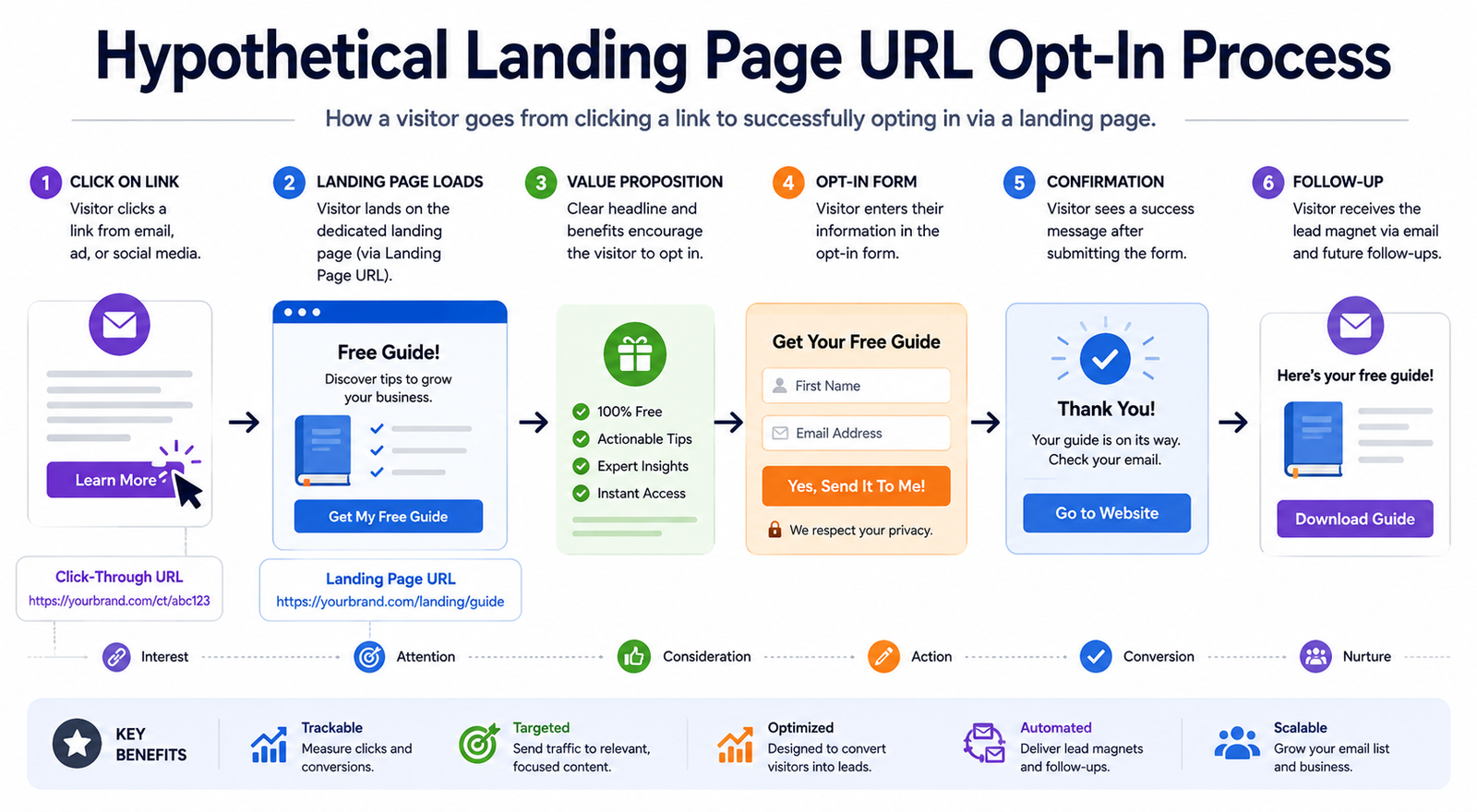
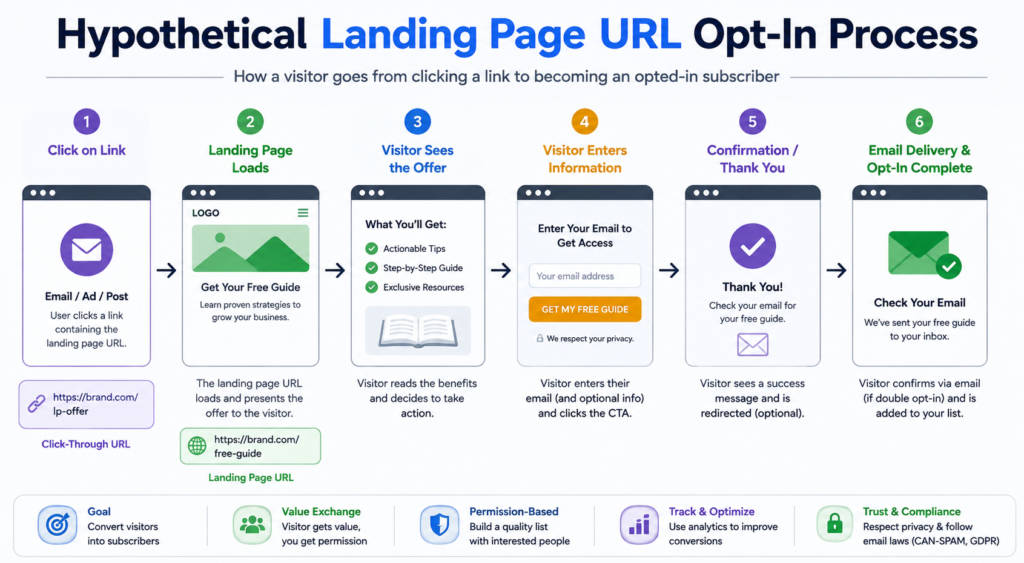
A typical hypothetical opt-in process starts when someone clicks a marketing link from social media, search results, or an advertisement. They arrive on the landing page, review the offer, complete the form, and then receive a confirmation message or thank-you page.
Many businesses also implement a double opt-in system. After submitting the form, users receive a confirmation email asking them to verify their subscription. While this adds an extra step, it improves email quality, reduces spam complaints, and ensures genuine subscribers join the mailing list. Hypothetical Landing Page URL Opt-In Process
Components of a High-Converting Landing Page
Every Hypothetical Landing Page URL Opt-In Process successful landing page contains several important elements working together to encourage conversions. The headline is usually the first thing visitors notice. It should immediately explain the value of the offer in clear and simple language.
The supporting content expands on the headline by explaining benefits rather than simply listing features. Visitors want to know how the offer solves their problems or helps them achieve a goal. Strong copywriting focuses on outcomes that matter to the audience.
The call-to-action (CTA) button is equally important. Instead of using generic phrases like “Submit,” effective landing pages use action-oriented text such as “Download My Free Guide,” “Get Instant Access,” or “Start My Free Trial.” These phrases create excitement while clearly communicating the next step.
Step-by-Step Example of a Hypothetical Landing Page URL Opt-In Process
Imagine a software company offering a free productivity checklist. The business promotes the checklist through blog posts, social media advertisements, and email campaigns. Hypothetical Landing Page URL Opt-In Process
A visitor clicks the advertisement and lands on the hypothetical URL:
The landing page immediately presents a compelling headline, highlights the checklist’s benefits, and includes a simple form requesting only the visitor’s name and email address. Hypothetical Landing Page URL Opt-In Process
After clicking the CTA button, the visitor sees a thank-you page explaining that the download link has been sent via email. If a double opt-in system is enabled, the visitor confirms their subscription before accessing the checklist. This complete sequence forms the hypothetical landing page URL opt-in process.
Why the Opt-In Process Matters
The opt-in process is much more than simply collecting email addresses. It establishes trust between a business and its audience. Visitors willingly provide their information because they believe they’ll receive something valuable in return.
An optimized opt-in process also improves lead quality. Since users voluntarily subscribe, they are generally more interested in the products, services, or information being offered. This often leads to better email engagement and higher sales conversions later.
Additionally, permission-based marketing complies with modern privacy expectations and various email marketing regulations. Instead of sending unsolicited emails, businesses communicate only with users who have clearly expressed interest. Hypothetical Landing Page URL Opt-In Process
Best Practices for Optimizing Landing Page Conversions
One of the biggest mistakes businesses make is asking for too much information. Short forms typically perform better because they reduce friction. In many cases, requesting only an email address is enough for the initial opt-in.
Page speed also plays a significant role. Slow-loading landing pages increase bounce rates, meaning visitors leave before they even see the offer. Optimizing images, minimizing scripts, and using reliable hosting can dramatically improve loading performance.
Trust signals further encourage conversions. Testimonials, customer reviews, security badges, privacy statements, and money-back guarantees all reassure visitors that they’re making a safe decision by submitting their information. Hypothetical Landing Page URL Opt-In Process
Common Mistakes to Avoid
Many landing pages fail because they overwhelm visitors with unnecessary information. Large blocks of text, multiple offers, and excessive navigation links distract users from the primary conversion goal.
Another common mistake involves weak headlines. If visitors cannot quickly understand what’s being offered, they’ll often leave within seconds. Headlines should clearly communicate value while creating curiosity.
Ignoring mobile optimization is another serious issue. Since a large percentage of web traffic now comes from smartphones, landing pages should display perfectly across all screen sizes. Mobile-friendly forms and responsive layouts improve both user experience and conversion rates.
Measuring Success in the Opt-In Process
Successful marketers continuously measure landing page performance rather than relying on assumptions. Conversion rate remains the most important metric, showing what percentage of visitors complete the opt-in form.
Bounce rate provides additional insight. A high bounce rate may indicate slow loading speeds, poor messaging, or irrelevant traffic sources. Understanding why visitors leave helps identify opportunities for improvement.
A/B testing is another valuable optimization method. Marketers test different headlines, CTA buttons, images, colors, and form layouts to determine which variations generate the highest conversion rates. Small improvements can produce significant long-term results.
The Role of SEO in Landing Pages
Although many landing pages receive traffic from paid advertising, search engine optimization can generate valuable organic visitors as well. Optimized titles, meta descriptions, relevant keywords, and quality content help search engines understand the page’s purpose.
Using the primary keyword naturally throughout headings and body content improves topical relevance without appearing forced. Internal linking also helps search engines discover related content while guiding users toward additional resources.
Technical SEO should not be overlooked. Fast page speed, secure HTTPS connections, structured URLs, mobile responsiveness, and proper indexing all contribute to stronger search visibility and improved user experience.
Future Trends in Landing Page Optimization
Landing pages continue evolving alongside user expectations and technological advancements. Personalization is becoming increasingly common, allowing marketers to display different offers based on visitor behavior, location, or referral source.
Artificial intelligence is also influencing landing page optimization. AI-powered tools can analyze visitor interactions, recommend design improvements, and automate personalized experiences that increase conversions.
Privacy regulations will continue shaping opt-in strategies as well. Businesses that prioritize transparency, user consent, and responsible data collection will build stronger relationships with their audiences while maintaining compliance with evolving regulations.
Conclusion
The hypothetical landing page URL opt-in process represents a fundamental concept in digital marketing. While the example may be theoretical, the principles behind it are used daily by businesses that successfully generate leads, grow email lists, and convert visitors into loyal customers.
An effective landing page combines a clear value proposition, persuasive copy, simple design, and an optimized opt-in process. Every element should guide visitors toward one specific action without unnecessary distractions. Continuous testing and improvement further enhance conversion rates over time.
Whether you’re building your first landing page or refining an existing marketing funnel, focusing on user experience, trust, and simplicity will produce better results. By applying these proven strategies, your hypothetical landing page URL opt-in process can become a practical framework for creating high-performing landing pages that consistently deliver measurable business growth.
You May Read Also:

