

Introduction
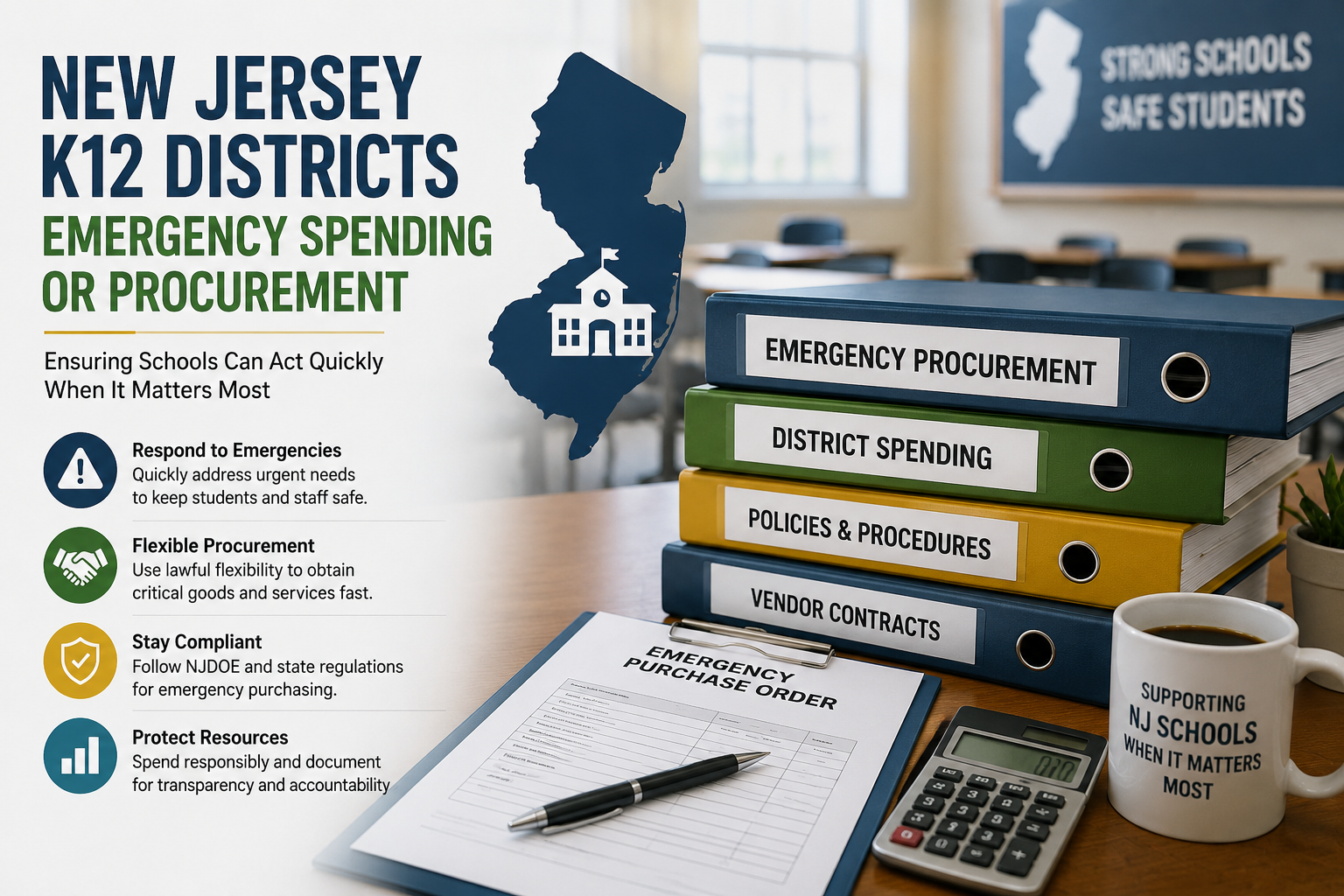
New Jersey K–12 districts emergency spending or procurement is an important topic for school administrators, business officials, board members, vendors, and even parents who want to understand how public schools respond during unexpected situations. While school districts normally follow strict purchasing procedures, emergencies often require immediate action to protect students, staff, and school property.
Emergency procurement allows districts to obtain essential goods and services without following the standard competitive bidding process when there is an urgent need. However, these purchases are still governed by state laws and regulations to ensure public funds are spent responsibly. Knowing when emergency procurement applies—and when it does not—is essential for maintaining compliance. New Jersey K–12 Districts Emergency Spending or Procurement
This guide explains how emergency spending works in New Jersey K–12 school districts, why it exists, the legal framework behind it, common scenarios, best practices, and how districts can remain transparent while acting quickly during emergencies.
Understanding Emergency Spending in New Jersey School Districts
Emergency spending refers to purchases that must be made immediately because delaying action would threaten public health, student safety, or the operation of a school. Unlike routine purchases, these expenditures occur under exceptional circumstances.
School districts in New Jersey generally follow purchasing laws that require competitive quotations or public bidding once spending exceeds certain thresholds. These rules help ensure fairness, encourage competition, and protect taxpayer dollars. However, emergencies sometimes make it impossible to wait through the normal procurement timeline. New Jersey K–12 Districts Emergency Spending or Procurement
For example, if a school’s heating system fails during winter, administrators cannot wait several weeks to advertise bids before making repairs. Students and staff need a safe learning environment immediately. In these situations, emergency procurement provides the flexibility needed to resolve the issue as quickly as possible. New Jersey K–12 Districts Emergency Spending or Procurement
Why Emergency Procurement Matters
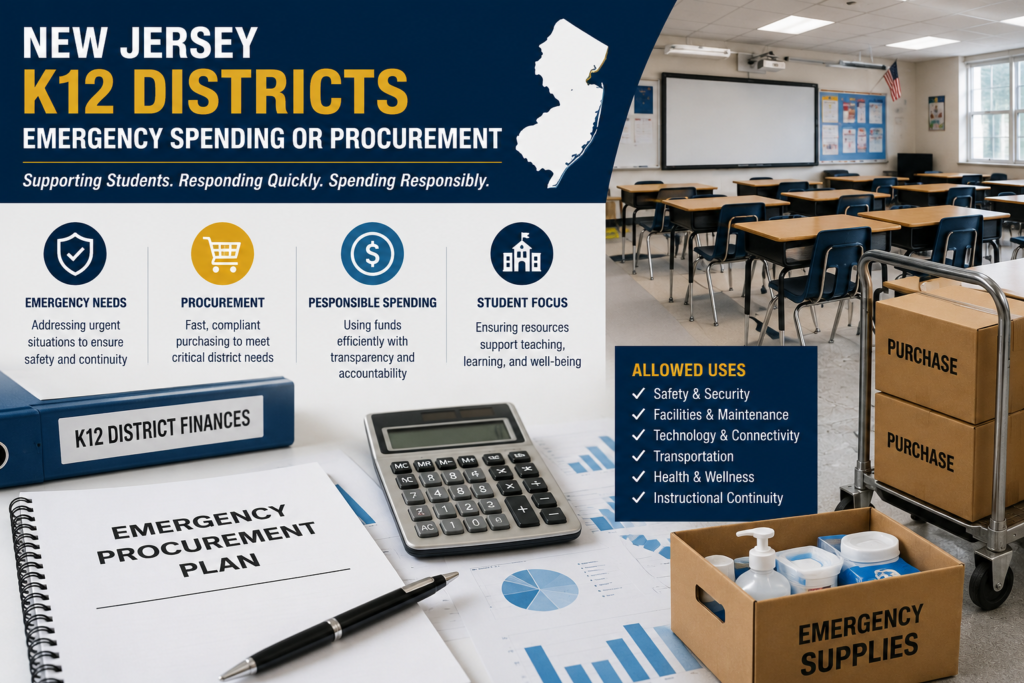
Schools New Jersey K–12 districts emergency spending or procurement are responsible for protecting thousands of students every day. Unexpected emergencies can disrupt education, damage facilities, or create dangerous conditions that require immediate attention.
Natural disasters such as floods, hurricanes, severe storms, or heavy snowfall can damage roofs, electrical systems, and classrooms. Districts must act quickly to restore safe operations, making emergency procurement a practical necessity rather than a convenience.
Public health emergencies also demonstrate the importance of emergency purchasing. During disease outbreaks, schools may need additional cleaning supplies, protective equipment, air filtration systems, or temporary instructional resources. Delays could place students and staff at unnecessary risk. New Jersey K–12 Districts Emergency Spending or Procurement
Beyond physical emergencies, technology failures may also require urgent action. Cybersecurity incidents, server failures, or network outages can interrupt educational services, requiring immediate repairs or specialized technical assistance. New Jersey K–12 Districts Emergency Spending or Procurement
Legal Framework Governing Emergency Procurement
New Jersey has established procurement laws that balance flexibility with accountability. Emergency purchasing is permitted under specific circumstances but is not intended to bypass normal purchasing rules simply for convenience.
District officials must generally demonstrate that the emergency was unforeseen and required immediate action. Documentation is typically required to explain why competitive bidding could not reasonably occur before making the purchase.
School business administrators, purchasing agents, and district leadership play important roles in ensuring emergency purchases comply with applicable regulations. Even after an emergency purchase is completed, districts often need to maintain records that justify the decision and explain how vendors were selected. New Jersey K–12 Districts Emergency Spending or Procurement
The governing board may also review emergency expenditures to maintain transparency and confirm that purchasing decisions were appropriate under the circumstances. New Jersey K–12 Districts Emergency Spending or Procurement
Common Situations That Require Emergency Spending
Emergency procurement covers a wide variety of situations that directly impact school operations.
One common example involves building infrastructure failures. A burst water pipe, collapsed roof, broken boiler, or electrical malfunction may require immediate repairs before students can safely return to classrooms. New Jersey K–12 Districts Emergency Spending or Procurement
Weather-related emergencies are another frequent reason for emergency spending. Hurricanes, flooding, tornadoes, and severe winter storms can damage school facilities, requiring rapid cleanup, restoration, and temporary repairs.
Security-related emergencies also qualify in many situations. If a school experiences vandalism, fire damage, or a security system failure, district officials may need emergency contractors to restore safe conditions without delay. New Jersey K–12 Districts Emergency Spending or Procurement
Technology emergencies have become increasingly important. Cyberattacks, ransomware incidents, or major network failures can disrupt learning and administrative operations, making immediate IT support essential. New Jersey K–12 Districts Emergency Spending or Procurement
Steps in the Emergency Procurement Process
Although emergencies require speed, districts should still follow an organized decision-making process whenever possible.
The first step is identifying whether the situation genuinely qualifies as an emergency. Administrators assess the risk to student safety, facility operations, or educational continuity. If delaying action would create unacceptable risks, emergency procurement may be appropriate. New Jersey K–12 Districts Emergency Spending or Procurement
Next, district officials document the emergency. Written records describing the incident, the risks involved, and the reason competitive bidding cannot be used help maintain accountability throughout the purchasing process.
District representatives then contact qualified vendors capable of responding immediately. Even during emergencies, officials often attempt to obtain reasonable pricing when circumstances allow. Selecting reputable vendors remains important for protecting public funds.
Finally, districts maintain complete documentation of invoices, contracts, approvals, vendor communications, and completed work. These records support future audits and demonstrate responsible stewardship of taxpayer resources.
Maintaining Transparency During Emergency Purchases
Emergency spending should never eliminate accountability. Public trust depends on transparent purchasing practices even during urgent situations. New Jersey K–12 Districts Emergency Spending or Procurement
Districts should clearly document every emergency purchase, including the reason for bypassing normal procurement procedures. Detailed records help demonstrate that officials acted responsibly and within legal authority. New Jersey K–12 Districts Emergency Spending or Procurement
School boards often review emergency expenditures during public meetings. These reviews allow elected or appointed officials to understand the circumstances, evaluate purchasing decisions, and confirm compliance with district policies.
Financial audits also play an important role. Independent auditors may examine emergency purchases to verify that expenditures were properly documented and supported by legitimate emergencies rather than administrative convenience.
Transparency ultimately strengthens public confidence and reduces the risk of procurement disputes. New Jersey K–12 Districts Emergency Spending or Procurement
Best Practices for New Jersey K–12 Districts
Preparing for emergencies before they occur makes procurement more efficient when urgent situations arise.
Districts benefit from maintaining updated emergency response plans that identify key decision-makers, purchasing procedures, and communication protocols. Having clear responsibilities established in advance reduces confusion during crises.
Building relationships with qualified vendors is another valuable strategy. Contractors familiar with district facilities can often respond more quickly when emergencies occur, reducing downtime and minimizing disruption to students. New Jersey K–12 Districts Emergency Spending or Procurement
Regular staff training is equally important. Purchasing officials, administrators, and maintenance personnel should understand procurement requirements, documentation expectations, and emergency approval procedures before an actual crisis develops.
Technology can also improve emergency procurement. Digital purchasing systems, electronic approvals, and cloud-based recordkeeping help districts process urgent purchases efficiently while preserving complete documentation.
Challenges Associated with Emergency Procurement
Emergency purchasing presents unique challenges despite its necessity.
One challenge involves balancing speed with fiscal responsibility. Officials must act quickly while still ensuring taxpayers receive fair value. Limited vendor availability during emergencies can make price comparisons difficult.
Another challenge is documentation. During stressful situations, administrators naturally focus on resolving immediate problems. However, maintaining accurate records remains essential for future audits and compliance reviews.
Vendor availability may also be limited following widespread disasters. When multiple districts compete for contractors simultaneously, procurement decisions become more complex, and project costs may increase due to high demand.
Public perception can present another challenge. Without clear communication, emergency purchases may appear unusual or expensive. Transparent explanations help communities understand why rapid decisions were necessary.
How Vendors Can Prepare to Work with School Districts
Businesses interested in serving New Jersey school districts should understand emergency procurement expectations before responding to urgent requests.
Contractors should maintain appropriate licensing, insurance, and professional qualifications. Districts generally prefer vendors that can demonstrate reliability and experience working with educational institutions.
Quick communication is equally valuable. Vendors capable of responding promptly, providing accurate estimates, and mobilizing resources rapidly are often better positioned during emergency situations.
Companies should also maintain organized documentation and detailed invoices. Clear records simplify district reporting requirements and strengthen long-term business relationships.
Finally, understanding public procurement standards helps vendors work effectively with school administrators while supporting compliance efforts.
Future Trends in Emergency Procurement
Emergency procurement continues to evolve as schools face new operational challenges.
Climate-related events are becoming more frequent in many regions, increasing the importance of disaster preparedness and resilient infrastructure planning. School districts are investing in preventative maintenance and emergency response capabilities to reduce long-term risks.
Cybersecurity has also become a growing priority. Modern schools rely heavily on digital learning platforms, cloud systems, and connected devices, making rapid IT procurement increasingly important during cyber incidents.
Artificial intelligence and data analytics may further improve procurement planning. Predictive maintenance systems can identify infrastructure problems before they become emergencies, reducing unexpected expenditures while improving operational efficiency.
Digital procurement platforms are expected to continue expanding, allowing districts to process approvals, maintain documentation, and communicate with vendors more efficiently than traditional paper-based systems.
Conclusion
New Jersey K–12 districts emergency spending or procurement plays a vital role in protecting students, maintaining school operations, and responding effectively to unexpected events. While standard procurement rules promote fairness and accountability, emergencies require a flexible approach that enables districts to act quickly when health, safety, or educational continuity is at risk.
Successful emergency procurement depends on careful planning, clear documentation, transparent decision-making, and compliance with applicable laws and district policies. By combining preparedness with responsible financial oversight, school districts can address urgent situations while maintaining public trust.
As schools continue adapting to changing environmental, technological, and public health challenges, emergency procurement will remain an essential component of effective district management. Understanding how these processes work helps administrators, vendors, and community members appreciate the balance between rapid response and responsible stewardship of public resources.
You May Read Also: New Condos for Sale

