

Introduction
Crowdfunding has transformed the way people raise money for ideas, businesses, personal causes, and creative projects. Instead of relying on banks, wealthy investors, or large financial institutions, individuals can now present their ideas online and receive financial support from hundreds or even thousands of people. This approach has made funding more accessible than ever before.
Over the last decade, has become a powerful financial tool for entrepreneurs, artists, nonprofits, and startups. Whether someone wants to launch a new product, publish a book, fund a medical emergency, or support a charitable mission, crowdfunding offers a practical way to gather financial backing while building a community around the cause.
In this guide, we’ll explore what is, how it works, its different types, benefits, challenges, and practical tips for running a successful campaign. Whether you’re considering launching your own campaign or simply want to understand how works, this article will give you a solid foundation.
What Is Crowdfunding?
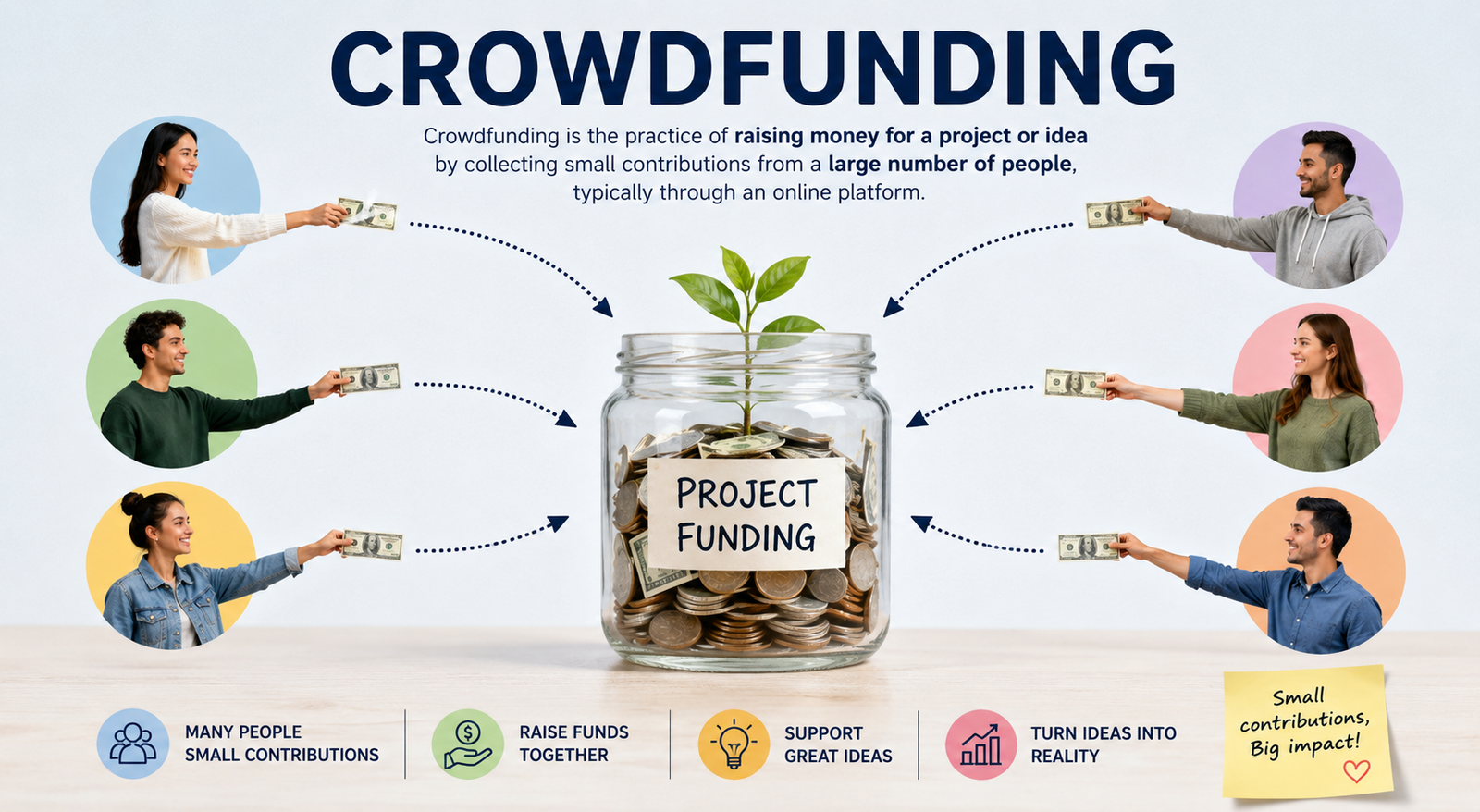
Crowdfunding is the process of collecting small amounts of money from a large number of people, usually through online platforms. Instead of receiving one large investment, campaign creators gather contributions from supporters who believe in their idea or cause.
The concept itself isn’t entirely new. Communities have historically pooled resources to support projects, businesses, or individuals in need. However, the internet has made this process much faster, allowing campaigns to reach supporters from around the world within hours.
Today, is used for everything from innovative technology products to independent films, medical expenses, educational projects, disaster relief, community initiatives, and nonprofit fundraising. Its flexibility has made it one of the most popular modern fundraising methods.
How Crowdfunding Works
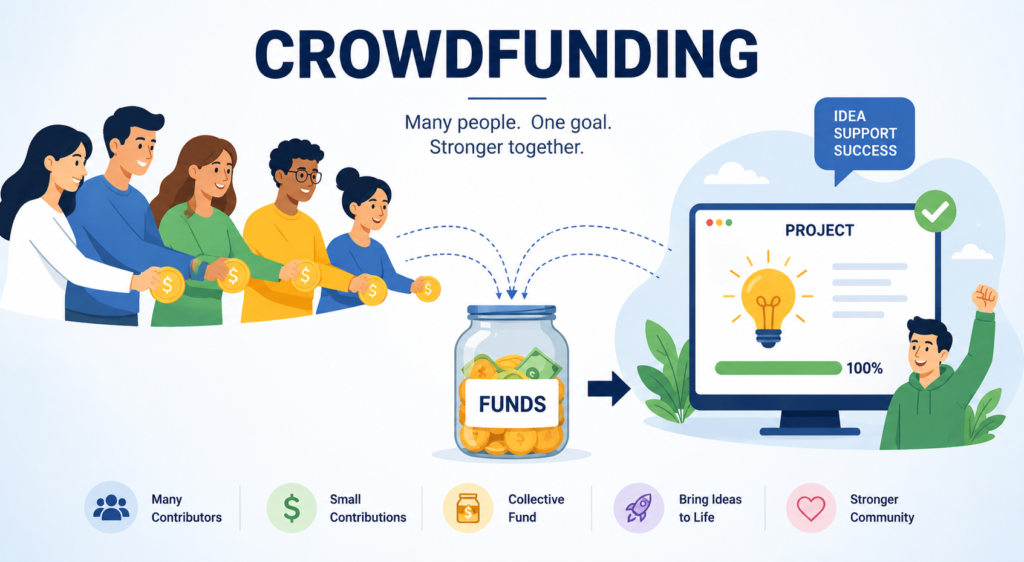
Crowdfunding Every crowdfunding campaign begins with a clear goal. The creator explains what they want to accomplish, how much money they need, and how the funds will be used. A compelling story often plays a significant role in convincing people to contribute.
Once the campaign goes live on a platform, supporters can browse the project and decide whether they want to contribute. Depending on the campaign type, contributors may receive rewards, equity, products, or simply the satisfaction of supporting a meaningful cause.
Throughout the campaign, creators typically post updates, answer questions, and promote their campaign through social media, email marketing, and personal networks. Active communication helps build trust and encourages additional contributions.
Different Types of Crowdfunding
Donation-based crowdfunding is one of the simplest forms. People donate money without expecting financial returns. These campaigns are common for charities, disaster relief, community projects, educational initiatives, and medical expenses.
Reward-based crowdfunding allows contributors to receive something in return. This could be an early version of a product, exclusive merchandise, personalized experiences, or limited-edition items. Many entrepreneurs use this model to validate product ideas before manufacturing.
Equity crowdfunding enables investors to receive ownership shares in a company. Instead of purchasing a product, contributors become shareholders with the hope that the business will grow in value over time. Loan-based crowdfunding, also known as peer-to-peer lending, involves borrowers receiving loans from multiple lenders and repaying them with interest according to agreed terms.
Benefits of Crowdfunding
One of the greatest advantages of crowdfunding is accessibility. Individuals who may struggle to secure traditional financing can present their ideas directly to potential supporters without needing extensive financial history or collateral.
Crowdfunding also serves as a valuable marketing tool. Successful campaigns often generate media attention, social media engagement, and customer interest long before the final product reaches the market. This early exposure helps creators build brand awareness and gather valuable customer feedback.
Another important benefit is market validation. If people are willing to financially support an idea, it provides strong evidence that there is genuine demand. This reduces uncertainty and helps entrepreneurs make informed business decisions before investing significant resources.
Challenges and Risks of Crowdfunding
Although crowdfunding offers many advantages, it also comes with challenges. Building a successful campaign requires careful planning, compelling storytelling, and consistent marketing efforts. Simply launching a campaign rarely guarantees success.
Competition is another major factor. Thousands of campaigns are launched every month, making it difficult to capture attention. Campaign creators must differentiate themselves through unique ideas, professional presentations, and strong promotional strategies.
Creators must also manage supporter expectations. Delays in production, shipping, or project completion can damage trust and reputation. Transparent communication throughout the campaign helps maintain credibility even when unexpected obstacles arise.
Tips for Running a Successful Crowdfunding Campaign
Preparation is one of the biggest factors behind successful crowdfunding campaigns. Before launching, creators should thoroughly research similar projects, define realistic funding goals, and prepare high-quality images and videos that showcase their idea effectively.
A compelling story can make a significant difference. Supporters often contribute because they connect emotionally with the creator’s mission rather than simply purchasing a product. Explaining the inspiration, challenges, and long-term vision helps build stronger relationships with potential backers.
Marketing should begin before the campaign officially launches. Building an email list, engaging with audiences on social media, and reaching out to influencers or journalists can create early momentum. Campaigns that attract immediate support often continue gaining visibility throughout their funding period.
Common Mistakes to Avoid
One common mistake is setting unrealistic funding goals. Asking for too much money without demonstrating value may discourage supporters, while setting the goal too low can create financial difficulties later in the project.
Another mistake involves poor campaign presentation. Low-quality photos, unclear descriptions, spelling mistakes, and confusing reward structures reduce credibility. Investing time in professional presentation significantly improves supporter confidence.
Many creators also underestimate the importance of communication. Regular updates, prompt responses to questions, and honest explanations during setbacks help maintain supporter trust. Silence often creates uncertainty and reduces confidence in the campaign.
Industries That Benefit from Crowdfunding
Technology startups frequently use crowdfunding to finance innovative gadgets, software, and consumer electronics. These campaigns allow inventors to gauge customer demand before committing to large-scale manufacturing.
Creative professionals also benefit greatly from crowdfunding. Independent filmmakers, musicians, writers, game developers, and artists often rely on supporter funding to complete projects while maintaining creative independence.
Nonprofit organizations, educational institutions, healthcare campaigns, and community initiatives regularly use crowdfunding to raise awareness alongside financial support. In many cases, these campaigns also inspire volunteer participation and long-term community engagement.
The Future of Crowdfunding
The future of crowdfunding looks increasingly promising as digital payment systems become more secure and online communities continue to grow. More people are becoming comfortable supporting projects from creators they discover online.
Emerging technologies such as blockchain and decentralized finance may further expand crowdfunding opportunities by increasing transparency and enabling global participation. These innovations could simplify fundraising while reducing transaction costs.
As entrepreneurship continues to flourish worldwide, crowdfunding will likely remain an essential funding option for innovators, creators, and organizations. It provides opportunities that traditional financing methods often cannot match, especially for early-stage ideas and community-driven initiatives.
Conclusion
Crowdfunding has fundamentally changed the fundraising landscape by allowing ordinary people to support extraordinary ideas. From launching businesses and creative projects to funding charitable causes and personal emergencies, it has become an effective way to turn ambitious goals into reality.
While success requires preparation, strategic marketing, and ongoing communication, crowdfunding offers far more than financial support. It helps creators build communities, validate ideas, and establish meaningful relationships with supporters who believe in their vision.
Whether you’re an entrepreneur with a groundbreaking product, an artist pursuing your next masterpiece, or someone raising money for an important cause, crowdfunding offers a flexible and accessible path toward achieving your goals. With careful planning, transparency, and persistence, it can become the foundation for long-term success and lasting impact.
You May Read Also: Playhop Roblox

