

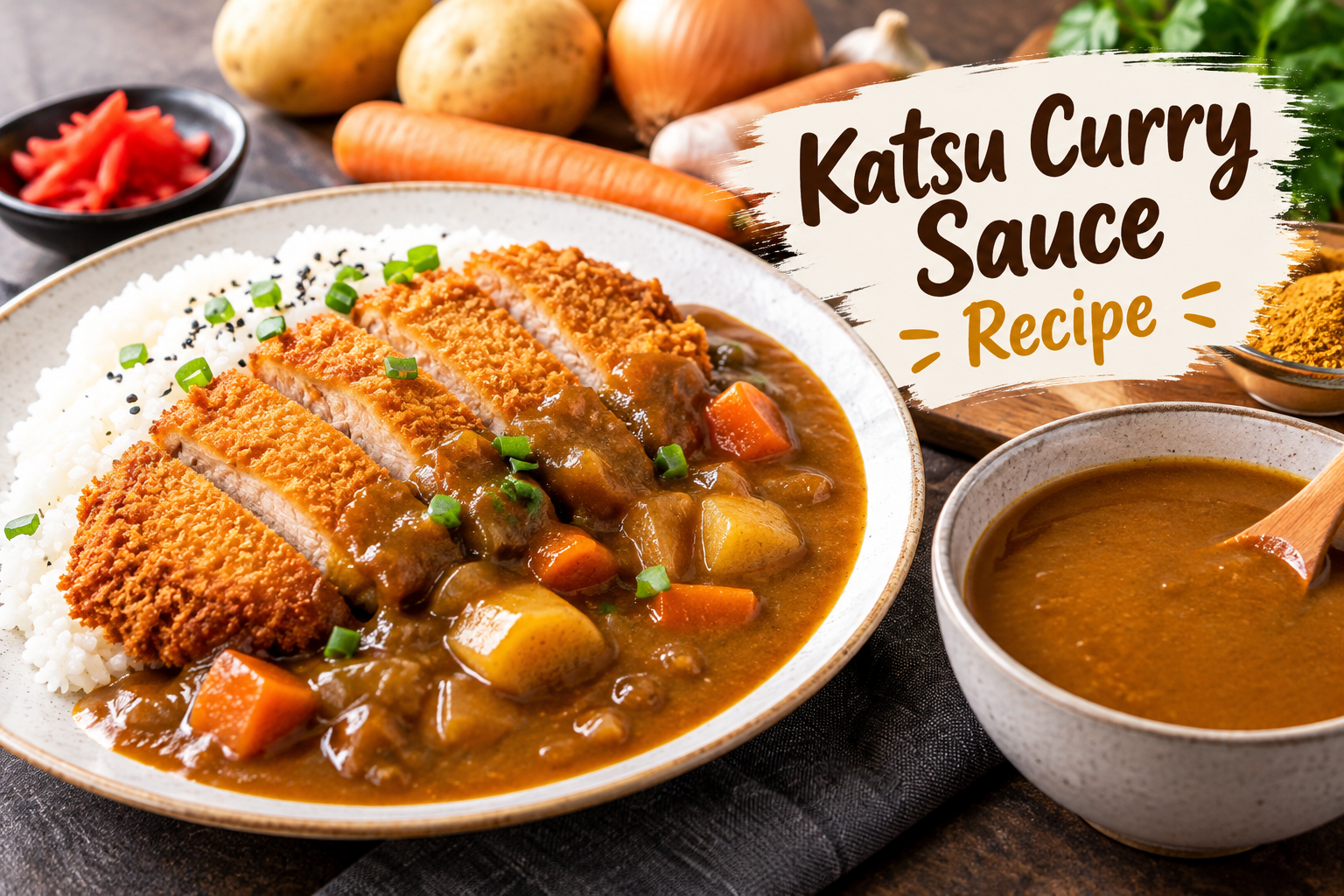
Katsu Curry Sauce Recipe A good katsu curry is all about balance: crispy breaded chicken or vegetables, fluffy rice, and a smooth curry sauce that is savory, mildly spiced, slightly sweet, and rich enough to bring everything together. This katsu curry sauce recipe shows you how to make that sauce at home using simple ingredients and a straightforward method.
The key is not simply adding curry powder to a liquid. Building the sauce in stages—softening the aromatics, cooking the spices, incorporating the flour, and gradually adding stock—creates much deeper flavor. Blending or straining the finished sauce also gives it the silky texture associated with restaurant-style katsu curry.
This version is flexible, too. You can make it with chicken or vegetable stock, adapt it for a vegan or gluten-free meal, make it with or without coconut milk, and adjust the sweetness or spice to suit your taste Katsu Curry Sauce Recipe.
What Is Katsu Curry Sauce?
Katsu curry sauce is a Japanese-style curry gravy traditionally served with a breaded cutlet, rice, and curry sauce. Chicken katsu is one of the most familiar combinations, but the sauce also works beautifully with tofu, vegetables, pork, or other crispy proteins.
The flavor is generally milder and sweeter than many intensely spicy curries. Onion, garlic, ginger, curry powder, soy sauce, and stock create the savory foundation, while a little sweetness balances the spices. Coconut milk can be added for a creamier, softer sauce.
If you’re looking for an authentic katsu curry sauce recipe, it is worth remembering that there isn’t one single universal formula. Home cooks, restaurants, and Japanese curry brands use different combinations of spices, vegetables, thickeners, and seasonings. This recipe is designed as a Japanese-inspired homemade version with the familiar sweet-savory curry profile Katsu Curry Sauce Recipe.
Katsu Curry Sauce vs. Tonkatsu Sauce
These two names are easy to confuse, but they refer to different sauces.
| Feature | Katsu Curry Sauce | Tonkatsu Sauce |
|---|---|---|
| Texture | Smooth, pourable gravy | Thick condiment |
| Flavor | Mild curry, savory and slightly sweet | Sweet, tangy and fruity |
| Main use | Katsu curry and rice | Breaded cutlets |
| Typical base | Stock, aromatics and curry spices | Fruit, vegetables, vinegar and seasonings |
| Served as | A major part of the meal | A finishing sauce |
So, if you’re making chicken katsu curry, you want a curry sauce, not a bottle of tonkatsu sauce.
What Does Katsu Curry Sauce Taste Like?
A well-balanced sauce should taste savory first, followed by gentle curry warmth and a subtle sweetness. Ginger and garlic add aromatic depth, while soy sauce provides umami Katsu Curry Sauce Recipe.
The sauce should not overwhelm the crispy katsu. Instead, it should complement the crunchy coating and plain rice. If you prefer more heat, you can increase the spice gradually without changing the fundamental character of the dish.
The texture is equally important. A good sauce should be thick enough to coat the back of a spoon but fluid enough to pour easily over rice and katsu Katsu Curry Sauce Recipe.
Ingredients for This Easy Katsu Curry Sauce Recipe
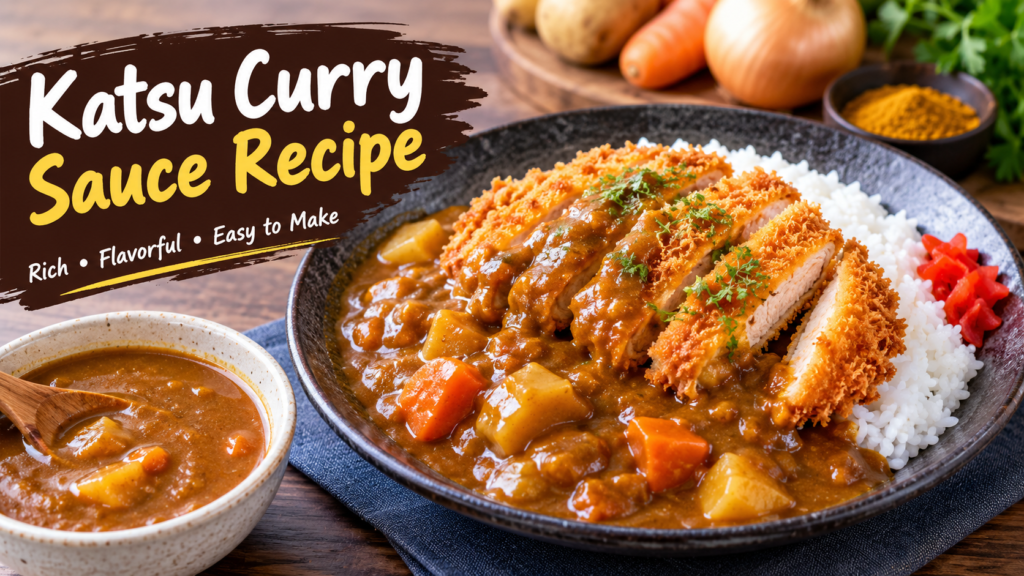
Katsu Curry Sauce Recipe You don’t need an enormous spice collection. The following ingredients create a flavorful, adaptable sauce.
- 1 tablespoon neutral cooking oil
- 1 medium onion, finely chopped
- 2 garlic cloves, minced
- 1 teaspoon freshly grated ginger
- 1½ tablespoons mild curry powder
- ½ teaspoon turmeric
- 2 tablespoons plain flour
- 400 ml chicken or vegetable stock
- 200 ml coconut milk
- 1 tablespoon light soy sauce
- 1–2 teaspoons sugar or maple syrup
- Salt, to taste
Why Each Ingredient Matters
Onion provides sweetness and body. Cook it slowly enough for it to soften properly rather than browning heavily.
Garlic and ginger give the sauce its aromatic backbone. Fresh versions generally provide a brighter flavor than dried alternatives.
Curry powder supplies the main spice profile. A mild blend is a good starting point because katsu curry is usually more aromatic than fiery.
Turmeric contributes a warm golden color and earthy character.
Flour thickens the sauce. Cooking it briefly with the aromatics and spices helps prevent a raw flour taste.
Stock forms the savory liquid base Katsu Curry Sauce Recipe.
Coconut milk adds creaminess and helps soften the spices. If you don’t want coconut, you can make a non-coconut version by using additional stock and adjusting the thickening.
Soy sauce contributes salt and umami.
Sugar or maple syrup balances the savory spices and adds the characteristic gentle sweetness.
How to Make Katsu Curry Sauce
1. Cook the Onion, Garlic and Ginger
Heat the oil in a saucepan over medium-low heat. Add the chopped onion and cook for several minutes until soft and translucent.
Add the garlic and ginger and cook for another minute. Keep the heat moderate. Garlic that becomes dark brown or burnt can make the entire sauce taste bitter Katsu Curry Sauce Recipe.
2. Add the Curry Powder and Turmeric
Stir in the curry powder and turmeric. Cook the spices with the aromatics for around 30 seconds to a minute, stirring constantly.
This short step helps develop the aroma of the spices. Avoid cooking them for too long at high heat because spices can become bitter when scorched.
3. Add the Flour
Sprinkle the flour over the onion and spice mixture. Stir thoroughly so there are no dry pockets.
Cook for about a minute while stirring. The mixture should resemble a thick paste.
4. Gradually Add the Stock
This is one of the most important steps Katsu Curry Sauce Recipe.
Pour in a small amount of stock while whisking or stirring continuously. Once the liquid has been incorporated, add a little more.
Adding all the stock at once can make it harder to eliminate lumps. Gradual additions give you much better control over the consistency.
5. Add Coconut Milk, Soy Sauce and Sweetener
Pour in the coconut milk and add the soy sauce and sugar or maple syrup.
Stir well and bring the sauce to a gentle simmer. Taste it before adding more salt because the soy sauce and stock already contribute saltiness.
6. Simmer Until Thickened
Let the sauce simmer gently for several minutes, stirring occasionally Katsu Curry Sauce Recipe.
You’re looking for a consistency that is thicker than ordinary soup but still easily pourable. Remember that the sauce will thicken further as it cools.
7. Blend or Strain the Sauce
For a rustic sauce, you can serve it as it is.
For a smoother, restaurant-style result, use an immersion blender until the sauce is completely smooth. For an especially silky finish, pass it through a fine-mesh sieve after blending Katsu Curry Sauce Recipe.
This final step can make a noticeable difference in texture, particularly if you want the sauce to sit neatly around crispy chicken katsu and rice.
How to Make Restaurant-Style Katsu Curry Sauce
The difference between an average sauce and an impressive one often comes down to technique rather than expensive ingredients.
First, don’t rush the onion. Properly softened onion creates a sweeter and deeper base Katsu Curry Sauce Recipe.
Second, use a mild curry powder unless you specifically want a hotter sauce. You can always add chili later, but it is harder to rescue a sauce that has become overwhelmingly spicy.
Third, add stock gradually. This helps you create a smooth, cohesive sauce instead of a floury or lumpy one.
Finally, pay attention to balance. Taste the finished sauce and consider four elements: salt, sweetness, spice, and richness. If one dominates, adjust it gradually.
Creamy vs. Non-Creamy Katsu Curry Sauce
Coconut milk is not essential, but it changes the character of the sauce.
A creamy version is mellow, rich, and smooth. It works particularly well when you want a takeaway-style curry sauce with a softer spice profile Katsu Curry Sauce Recipe.
A non-creamy version is lighter and lets the curry spices and stock stand out more clearly.
If you’re avoiding coconut milk, replace some or all of it with additional unsalted stock and adjust the flour or another thickener as necessary.
Easy Ingredient Substitutions
This recipe is easy to adapt.
For a vegan katsu curry sauce: Use vegetable stock and a plant-based sweetener.
For a gluten-free version: Replace wheat flour with a suitable gluten-free thickener and use gluten-free soy sauce or tamari. Check the labels on stock and curry powder as well.
For a coconut-free sauce: Use additional stock and maintain the desired consistency with your chosen thickener.
For a sweeter sauce: Add a small amount of sugar or maple syrup at a time Katsu Curry Sauce Recipe.
For a spicier sauce: Add chili gradually after the basic sauce is balanced.
The important rule with substitutions is to change one thing at a time. That makes it much easier to understand how each ingredient affects the final flavor.
How Spicy Is Katsu Curry Sauce?
Katsu curry is generally associated with a mild, approachable curry flavor rather than extreme heat.
For a family-friendly sauce, stick with mild curry powder and omit additional chili.
For medium heat, add a small pinch of chili flakes or a little fresh chili.
For a hotter sauce, increase the chili gradually and taste as you go. The goal is to add heat without masking the ginger, garlic, curry spices, and savory base Katsu Curry Sauce Recipe.
How to Fix Katsu Curry Sauce
Sauce Is Too Thick
Whisk in warm stock or water a little at a time. Don’t add a large amount at once because you may dilute the flavor.
Sauce Is Too Thin
Allow it to simmer uncovered for a few minutes. If it still needs thickening, use a suitable thickener carefully rather than adding large amounts of flour directly to the hot sauce.
Sauce Is Too Salty
Add unsalted stock or water gradually. Depending on the recipe, a small amount of extra coconut milk can also soften the saltiness.
Sauce Is Too Spicy
Increase the volume of the sauce with additional unsalted liquid and rebalance the seasoning Katsu Curry Sauce Recipe.
Sauce Is Lumpy
An immersion blender can usually solve the problem. For an exceptionally smooth finish, strain the sauce through a fine sieve.
Sauce Tastes Bland
Check the seasoning first. A little soy sauce can add umami, while a small amount of curry powder can strengthen the spice profile. Add both cautiously.
What to Serve With Katsu Curry Sauce
The classic combination is crispy chicken katsu, steamed white rice, and curry sauce. Slice the chicken before serving and spoon the sauce beside or around it so some of the crispy coating remains exposed Katsu Curry Sauce Recipe.
For a vegetarian meal, try tofu katsu, aubergine, sweet potato, or another breaded vegetable.
The sauce also works with:
- Steamed rice
- Vegetable katsu
- Tofu
- Salmon
- Crispy pork
- Roasted vegetables
- Chips or fries
- Noodles
A useful serving trick is to keep some sauce underneath or beside the katsu instead of completely covering the crust. This helps preserve the contrast between crunchy coating and smooth curry.
How to Store Katsu Curry Sauce
Allow the sauce to cool appropriately before transferring it to a clean, airtight container and refrigerating it Katsu Curry Sauce Recipe.
The sauce may become noticeably thicker when chilled. That’s normal. When reheating, warm it gently and add a splash of water or stock if necessary to restore the original consistency.
For longer storage, freeze the sauce in individual portions. Small containers or freezer-safe portions make it easier to thaw only what you need.
Always follow appropriate food-safety guidance for cooling, refrigeration, freezing, thawing, and reheating.
Can You Make Katsu Curry Sauce Ahead?
Absolutely. Making the sauce ahead can make weeknight katsu curry much easier Katsu Curry Sauce Recipe.
Prepare the sauce, cool and store it properly, then reheat it gently while you cook the chicken or vegetable katsu. This also makes the recipe useful for meal preparation Katsu Curry Sauce Recipe.
For the best texture, taste the reheated sauce again before serving. Chilling can slightly change its thickness and seasoning, so you may need a small splash of stock or water.
Common Mistakes to Avoid
Burning the garlic: Bitter garlic can dominate the sauce.
Using too much curry powder: More spice doesn’t automatically mean more flavor.
Adding stock too quickly: Gradual additions help prevent lumps.
Skipping the blending or straining: If you want a silky restaurant-style texture, this step matters.
Over-salting early: Stock and soy sauce both contain salt, so season gradually.
Making the sauce excessively thick: Katsu curry sauce should coat the food but remain pourable Katsu Curry Sauce Recipe.
Frequently Asked Questions
1. What is katsu curry sauce made of?
Katsu curry sauce commonly combines aromatics such as onion, garlic and ginger with curry powder, stock, a thickener, soy sauce and a little sweetness. Some versions also use coconut milk for a creamier texture.
2. Is katsu curry sauce the same as tonkatsu sauce?
No. Katsu curry sauce is a curry gravy served with katsu and rice. Tonkatsu sauce is a thicker, sweet and tangy condiment traditionally served with breaded cutlets.
3. Can I make katsu curry sauce without coconut milk?
Yes. Coconut milk is optional. You can create a lighter sauce using additional stock and an appropriate thickener. The result will be less creamy but still flavorful.
4. Can I make this katsu curry sauce recipe vegan?
Yes. Use vegetable stock and ensure the soy sauce, sweetener, and other packaged ingredients are suitable for your dietary requirements.
5. Can I make katsu curry sauce gluten-free?
Yes. Replace wheat flour with a suitable gluten-free thickener and use gluten-free soy sauce or tamari. Check packaged stock and spice blends for hidden gluten.
6. Can I freeze homemade katsu curry sauce?
Yes, provided it is cooled, stored, frozen, thawed, and reheated safely. Freezing individual portions is especially convenient for meal preparation.
7. How do I make katsu curry sauce taste more like a restaurant version?
Focus on technique: properly soften the aromatics, briefly cook the spices, incorporate stock gradually, balance sweetness and salt, and blend or strain the finished sauce for a smooth texture.
Conclusion
This easy katsu curry sauce recipe proves that you don’t need complicated ingredients to make a flavorful Japanese-inspired curry at home. The most important elements are building the flavor gradually, controlling the consistency, and balancing savory, sweet, aromatic, and spicy notes.
Serve the finished sauce with crispy chicken katsu and rice for a classic meal, or use tofu and vegetables for a meat-free version. Once you’ve mastered the basic sauce, you can easily adjust the heat, creaminess and sweetness to create your preferred version.
SEO Title
Katsu Curry Sauce Recipe – Easy & Restaurant-Style
Meta Description
Make this easy katsu curry sauce recipe at home with simple ingredients. Get a smooth, restaurant-style sauce with helpful tips—try it today!
You May Read Also: YouTube Download from URL

