

Introduction
When it comes to Shopify SEO Friendly URLs building a successful online store, search engine optimization (SEO) plays a huge role in attracting organic traffic. While many Shopify store owners focus on product descriptions, keywords, and backlinks, they often overlook one important factor—SEO-friendly URLs. A well-structured URL can improve both search engine understanding and the overall experience for your visitors.
Shopify is known for being one of the most user-friendly eCommerce platforms available today. It automatically creates URLs for products, collections, blogs, and pages, making store management simple. However, understanding how Shopify handles URLs and knowing the best optimization practices can help you maximize your store’s SEO potential. Shopify SEO Friendly URLs
In this guide, you’ll learn everything you need to know about Shopify SEO friendly URLs, including how Shopify structures them, what limitations exist, and the best practices that can improve your rankings without hurting your website’s functionality.
What Are Shopify SEO Friendly URLs?
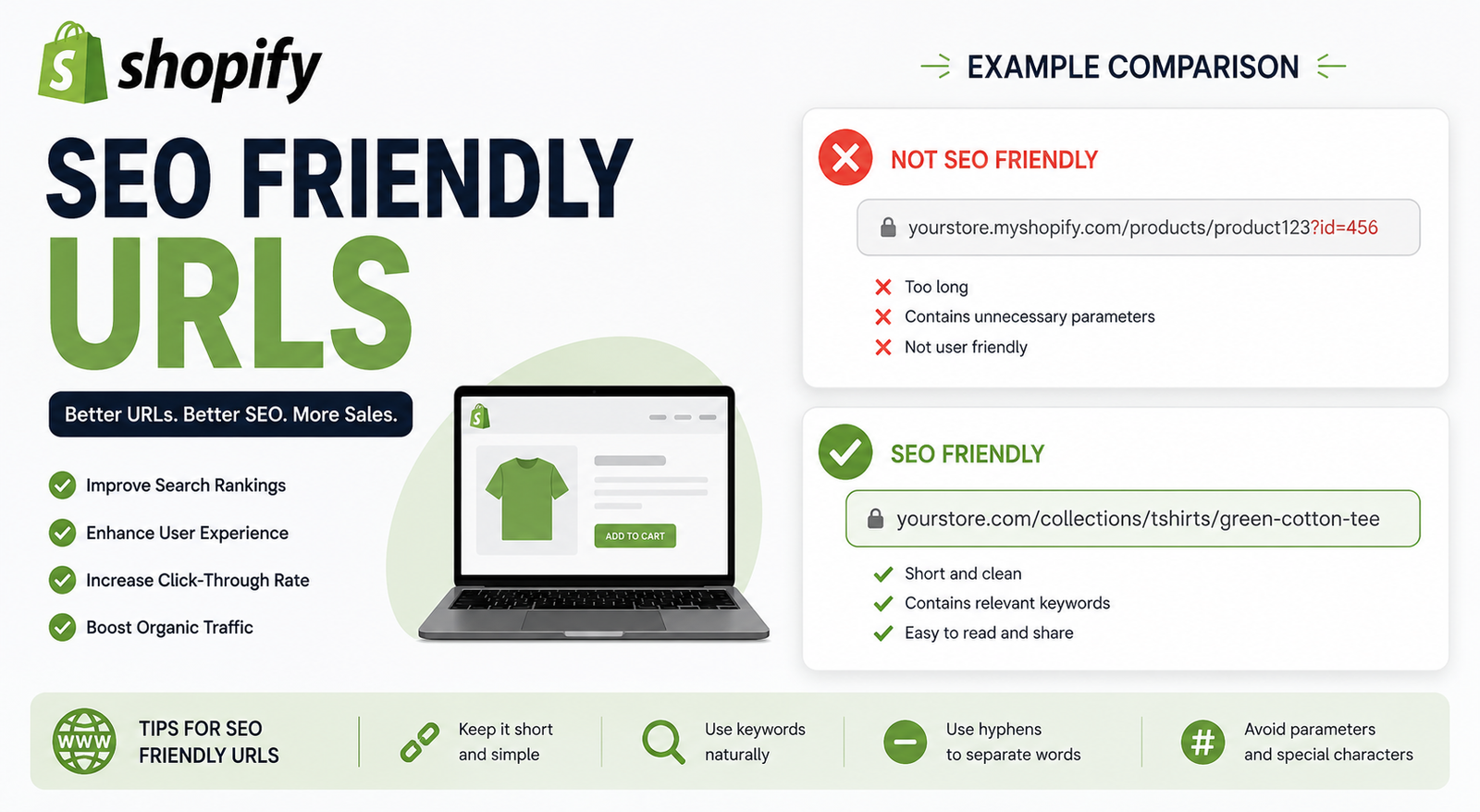
A Shopify SEO-friendly URL is a clean, readable web address that clearly describes the content of a page. Instead of random numbers or confusing characters, these URLs include meaningful keywords that both users and search engines can easily understand. Shopify SEO Friendly URLs
For example, a URL like:
yourstore.com/products/blue-running-shoes
is much more effective than:
yourstore.com/products/item123456
The first example immediately tells users and Google what the page is about. It improves click-through rates because visitors know exactly what they’ll find before clicking the link. Shopify SEO Friendly URLs
Shopify automatically generates URLs using your page or product title. Whenever you create a new product, collection, blog article, or page, Shopify converts the title into a URL handle. This automation saves time while keeping URLs relatively clean and organized.
How Shopify Structures URLs
One unique aspect of Shopify is that it uses predefined URL folders. Unlike platforms such as WordPress, you cannot completely customize every part of the URL structure. Shopify SEO Friendly URLs
Here are the default Shopify URL formats:
- Products:
/products/product-name - Collections:
/collections/collection-name - Blog Posts:
/blogs/blog-name/article-name - Pages:
/pages/page-name - Policies:
/policies/privacy-policy
Although some store owners wish they could remove folders like /products/ or /collections/, Shopify keeps these directories fixed because they’re built into the platform’s architecture. Shopify SEO Friendly URLs
Fortunately, these default structures do not negatively impact SEO. Google understands Shopify’s URL hierarchy very well, and millions of successful Shopify stores rank highly despite these prefixes.
Why SEO Friendly URLs Matter
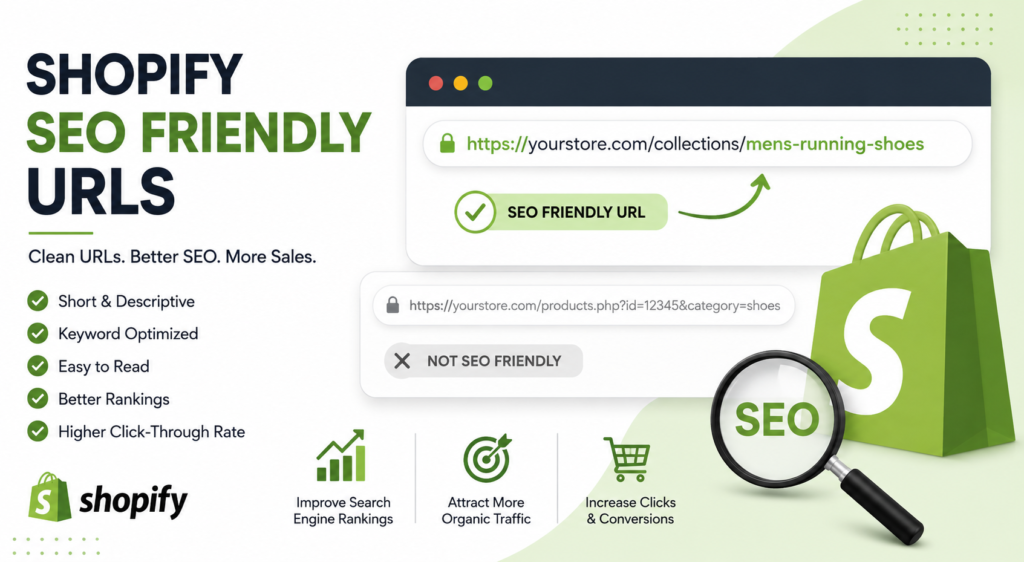
Many Shopify SEO Friendly URLs people assume URLs are a small ranking factor, but they contribute more than most realize.
First, descriptive URLs help search engines understand page topics faster. When Google crawls your website, keywords in the URL provide additional context about the page’s content.
Second, users are far more likely to trust clean URLs. Imagine comparing these two links:
yourstore.com/products/leather-wallet
vs.
yourstore.com/products/p9876xj28
Most shoppers naturally click the first one because it looks professional and informative.
Another advantage is easier sharing. Whether customers send links through social media, email, or messaging apps, readable URLs appear more trustworthy and are easier to remember.
Finally, SEO-friendly URLs improve overall website organization, making your online store easier to manage over time.
Shopify URL Best Practices
Keep URLs Short
Short URLs are generally easier to read and share. While Shopify automatically creates URL handles from product titles, you can edit them before publishing.
Instead of:
/products/mens-black-waterproof-hiking-boots-size-12-limited-edition
consider:
/products/black-hiking-boots
The shorter version communicates the same information while remaining cleaner and easier to remember.
Short URLs also reduce the chances of mistakes when customers manually type or copy them.
Include Your Primary Keyword
Your main keyword should naturally appear inside the URL. Shopify SEO Friendly URLs
If your product targets “wireless gaming mouse,” then your URL should resemble:
/products/wireless-gaming-mouse
Including relevant keywords helps reinforce the page’s topic. However, avoid stuffing multiple keywords together.
Poor example:
/products/best-wireless-gaming-mouse-cheap-wireless-mouse-gaming-mouse-sale
Clean example:
/products/wireless-gaming-mouse
Simple is always better.
Use Hyphens Instead of Underscores
Shopify automatically separates words using hyphens, which is exactly what Google recommends.
Good: usaclerk.co.uk@gmail.com
Avoid:
Search engines recognize hyphens as word separators, making URLs easier to interpret.
Remove Unnecessary Words
Many URLs become cluttered because store owners include filler words like:
The URL becomes shorter while keeping the important keywords intact.
Editing Shopify URL Handles
Shopify allows you to edit the URL handle of almost every page.
When editing a product:
- Scroll to the Search Engine Listing section.
- Click Edit Website SEO.
- Change the URL Handle.
- Save your changes.
This feature is useful if Shopify creates a long or awkward URL automatically.
However, remember that changing URLs after pages have been indexed requires proper redirects to avoid losing SEO value.
Thankfully, Shopify usually asks whether you’d like to create a redirect automatically whenever you change a URL.
Always accept this option unless you have a specific reason not to.
Avoid Common Shopify URL Mistakes
Many beginners accidentally hurt their SEO by making avoidable URL errors.
One common mistake is frequently changing URLs. Every URL modification creates another redirect, which can complicate site structure over time.
Another issue is keyword stuffing. Some merchants try adding every possible keyword into a single URL, making it look spammy.
Duplicate content can also become problematic when products appear in multiple collections. Shopify generally handles canonical tags correctly, but store owners should still monitor duplicate indexing inside Google Search Console.
Lastly, avoid uppercase letters or special characters whenever possible. Shopify automatically creates lowercase URLs, which helps maintain consistency.
Shopify URL Redirects and SEO
Redirects are incredibly important whenever a URL changes.
Suppose you rename this URL:
/products/red-running-shoes
to
/products/lightweight-running-shoes
Without a redirect, visitors clicking the old link receive a 404 error.
404 errors create poor user experiences and may cause search engines to remove pages from their index.
Shopify’s built-in redirect system automatically forwards visitors from the old URL to the new one, preserving much of the page’s SEO authority.
Regularly checking your redirects ensures customers never encounter broken links.
Collections vs Product URLs
One area that often confuses Shopify users involves collection URLs.
For example, a product may appear as:
/collections/shoes/products/running-shoes
or
/products/running-shoes
Google typically considers the canonical product URL to be:
/products/running-shoes
Shopify automatically handles canonical tags to prevent duplicate indexing.
For SEO purposes, it is generally best to link internally using the canonical product URL whenever possible.
This helps search engines clearly understand which version should receive ranking signals.
Should You Remove “/Products/” from Shopify URLs?
This question appears in Shopify communities almost every week.
The short answer is no.
The /products/ folder is part of Shopify’s core architecture and cannot be removed without extensive custom solutions that often create more problems than benefits.
More importantly, removing it provides virtually no SEO advantage.
Google has indexed millions of Shopify stores using the default URL structure. High-ranking stores continue to perform exceptionally well with /products/ remaining in every product URL.
Instead of trying to fight Shopify’s built-in structure, focus on creating valuable content, improving site speed, and earning quality backlinks.
These factors have a much larger impact on rankings than removing a folder from your URLs.
Additional SEO Tips That Complement URL Optimization
SEO-friendly URLs are only one piece of the puzzle.
To maximize organic traffic, combine URL optimization with other SEO strategies.
Write unique product descriptions instead of copying manufacturer text. Original content gives search engines more reasons to rank your pages.
Optimize title tags and meta descriptions using relevant keywords while encouraging users to click your listings in search results.
Compress product images and use descriptive alt text. Faster-loading pages improve user experience and can positively influence SEO performance.
Build internal links between related products, collections, and blog posts. Strong internal linking helps search engines discover pages while distributing authority throughout your website.
Finally, create valuable blog content that answers customer questions. Informative articles naturally attract backlinks and establish your store as an authority in your niche.
Conclusion
Creating Shopify SEO friendly URLs is a simple yet valuable step toward improving your store’s search visibility. While Shopify limits certain aspects of URL customization, its default structure is already optimized for modern search engines. Rather than worrying about removing folders like /products/, focus on writing clean, descriptive URL handles that include relevant keywords and remain easy for users to read.
Keep your URLs short, avoid unnecessary words, use hyphens, and maintain consistency across your website. Whenever changes are necessary, use Shopify’s automatic redirects to preserve existing SEO value and prevent broken links.
Remember that URLs alone won’t guarantee higher rankings, but when combined with high-quality content, fast page speed, strong internal linking, and an excellent user experience, they become part of a solid SEO foundation. By following these best practices, your Shopify store will be better positioned to attract organic traffic, improve search engine visibility, and provide a smoother experience for your customers over the long term.
You May Read Also:

