

Watering Schedule for New Sod Installing new sod is one of the fastest ways to achieve a lush, green lawn. However, laying sod is only the beginning. The real secret to success lies in following the correct watering schedule for new sod. Even premium-quality sod can fail if it doesn’t receive enough water during its first few weeks. On the other hand, overwatering can be just as damaging because it encourages shallow roots, fungal diseases, and weak turf.
The first month after installation is the most important period in your lawn’s life. During this time, the grass is working hard to establish new roots that grow into the soil underneath. Proper watering ensures those roots develop deeply, giving your lawn long-term strength and resilience. Watering Schedule for New Sod
In this guide, you’ll learn exactly how often to water new sod, how much water it needs during each stage, common mistakes to avoid, and professional tips that will help your lawn thrive for years to come. Watering Schedule for New Sod
Why Watering New Sod Is So Important
New sod may look like a mature lawn, but it behaves very differently. Unlike established grass, freshly installed sod has very little connection to the soil beneath it. Its roots have been cut during harvesting and need time to regrow. Without consistent moisture, those roots cannot establish themselves properly. Watering Schedule for New Sod
When sod dries out in the early days, the grass experiences significant stress. You may notice shrinking seams between pieces, curled grass blades, brown patches, or even sections that begin lifting away from the soil. These are signs that the lawn isn’t receiving the moisture it needs.
Proper watering also helps eliminate air pockets between the sod and the soil. Good contact allows roots to penetrate deeper and faster, resulting in a healthier lawn that becomes more drought-resistant over time. Think of watering as helping your lawn settle into its new home.
The Ideal Watering Schedule for New Sod
The watering schedule changes as your lawn matures. The goal is to keep the sod consistently moist at first and then gradually encourage deeper root growth. Watering Schedule for New Sod
Days 1–7: Keep the Sod Constantly Moist
The first week is the most critical period. Water immediately after installation until both the sod and the soil underneath are thoroughly soaked.
Continue watering two to four times daily depending on weather conditions. Morning watering should always be the longest session, while afternoon and early evening watering help maintain moisture during hot days. Watering Schedule for New Sod
Avoid letting the sod dry out. Lift one corner occasionally to check underneath. The soil should feel damp but not muddy or waterlogged.
Days 8–14: Begin Reducing Frequency Watering Schedule for New Sod
By the second week, roots are beginning to anchor into the soil. You can reduce watering to once or twice daily while increasing the duration of each watering session.
This encourages roots to grow downward instead of staying near the surface. Deep watering is much more beneficial than frequent light sprinkling. Watering Schedule for New Sod
Continue monitoring weather conditions. Extremely hot or windy days may require additional watering to prevent stress.
Days 15–21: Transition Toward Deep Watering
At this stage, most sod varieties have established a basic root system. Water every other day or approximately three to four times each week.
Each watering session should be longer so moisture penetrates several inches into the soil. This helps strengthen the developing root system.
Watch for footprints after walking across the lawn. If footprints remain visible for several minutes, the grass may need additional moisture.
After Four Weeks: Follow a Normal Lawn Schedule
After approximately one month, your sod should be firmly rooted. Test by gently pulling on a corner. If it resists lifting, the roots have likely established successfully.
You can now transition to watering one or two times each week with deep soaking sessions instead of daily watering.
This schedule encourages strong root development and creates a healthier, more drought-tolerant lawn over the long term.
How Much Water Does New Sod Actually Need?
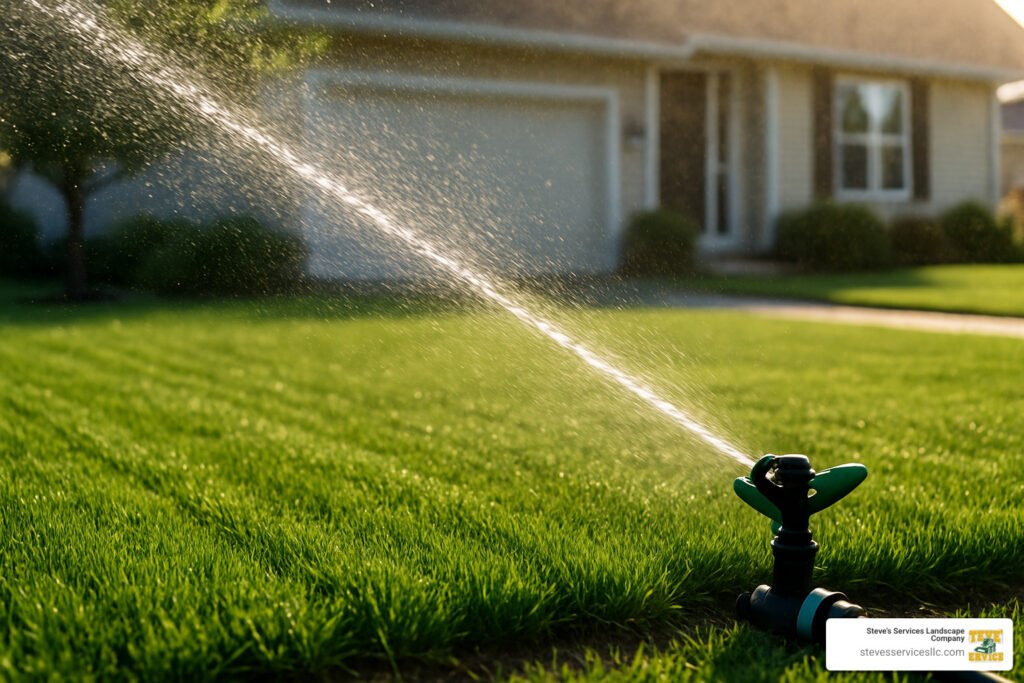
watering schedule for new sod One of the biggest questions homeowners ask is how much water should be applied during each session. There isn’t a single answer because soil type, weather, grass variety, and sprinkler systems all influence water requirements.
Generally, new sod requires enough water to moisten the top four to six inches of soil during the establishment period. Sandy soils drain quickly and may require more frequent watering. Clay soils retain moisture longer and often need fewer watering sessions.
Instead of relying solely on timing, observe the soil itself. Push a screwdriver into the ground or dig a small hole to verify that moisture has reached the desired depth.
Using rain gauges or empty tuna cans around your lawn can also help measure how much water your sprinkler system delivers.
Best Time of Day to Water New Sod
Early morning remains the best time to water newly installed sod. Watering between sunrise and mid-morning minimizes evaporation while giving the grass plenty of time to dry before nightfall.
Morning watering allows the soil to absorb moisture efficiently and helps prevent fungal diseases that often develop when grass stays wet overnight.
If temperatures become extremely hot during the afternoon, a short supplemental watering can help cool the turf and prevent excessive drying. However, avoid soaking the lawn late in the evening whenever possible.
Consistent timing also helps establish healthy growth patterns and keeps your lawn looking fresh throughout the establishment period.
Signs Your New Sod Needs More Water
Learning to recognize early warning signs can prevent permanent lawn damage.
Grass blades that begin curling or folding inward usually indicate dehydration. The lawn may also develop a dull blue-gray appearance instead of its normal vibrant green color.
Another common sign is shrinking seams between sod pieces. As the sod dries, it contracts, leaving visible gaps. Immediate watering can often correct this issue before permanent damage occurs.
Brown edges, dry soil beneath the sod, and persistent footprints are additional indicators that your watering schedule needs adjustment.
Signs You’re Overwatering Your Sod
Many homeowners believe more water is always better, but excessive watering creates its own problems.
If water pools on the surface or remains standing for long periods, your lawn is receiving too much moisture. Constantly saturated soil deprives roots of oxygen, slowing their growth.
Overwatering also encourages fungal diseases, mold, algae growth, and root rot. In severe cases, the sod may become soft, spongy, or begin developing unpleasant odors.
Healthy soil should remain moist but never swamp-like. Finding this balance is one of the keys to successful sod establishment.
Factors That Affect Your Watering Schedule
No two lawns require identical watering routines because environmental conditions vary significantly.
Hot summer temperatures increase evaporation, meaning your lawn will need more frequent watering. Wind also removes moisture from both the grass blades and soil surface, accelerating drying.
Soil type plays an equally important role. Sandy soil drains rapidly, while clay retains moisture much longer. Shady areas often stay damp longer than lawns exposed to full sunlight all day.
Grass species also influence watering needs. Kentucky Bluegrass, Bermuda, Zoysia, Fescue, and St. Augustine each have slightly different moisture requirements during establishment.
Monitoring your lawn instead of relying solely on a fixed schedule leads to much better results.
Common Mistakes Homeowners Make
Many new lawns fail because of avoidable watering mistakes.
The most common mistake is watering too lightly. Short watering sessions only moisten the surface, encouraging shallow roots that struggle during dry weather.
Another mistake is watering at random times. Consistency helps roots establish more effectively and reduces plant stress.
Some homeowners mow too early before roots have anchored securely. Always ensure the sod is firmly attached before the first mowing.
Ignoring rainfall is another issue. Natural rain counts toward your watering schedule, so adjust irrigation accordingly instead of automatically following the same routine.
Finally, don’t assume every section of your lawn receives equal coverage. Check sprinkler performance regularly to identify dry spots or areas receiving excessive water.
Professional Tips for Healthy New Sod
Professional landscapers rely on several simple practices that significantly improve sod establishment.
Walk across the lawn only when necessary during the first few weeks. Excessive foot traffic can shift sod pieces and damage developing roots.
Keep mower blades sharp for the first cut. Dull blades tear young grass instead of making clean cuts, increasing stress on the lawn.
Avoid applying heavy fertilizer immediately after installation unless recommended for your specific sod variety. Too much fertilizer can burn developing roots.
Monitor your irrigation system regularly. Even slight sprinkler adjustments can dramatically improve water distribution across the lawn.
Finally, remain patient. Although sod looks mature on installation day, complete root establishment often takes several weeks depending on weather and growing conditions.
Frequently Asked Questions
Can you water new sod too much?
Yes. Overwatering limits oxygen in the soil, weakens root growth, and increases the risk of fungal diseases. The soil should remain consistently moist, not saturated.
When can I stop watering every day?
Most lawns can transition away from daily watering after two to three weeks, depending on weather and root development.
How do I know when the sod has rooted?
Gently lift one corner of the sod. If it resists pulling and feels firmly attached, the roots have established successfully.
Should I water after rain?
Not always. Check soil moisture first. If rainfall has already soaked the soil several inches deep, additional watering is unnecessary.
Can I walk on newly installed sod?
Limit foot traffic during the first two to three weeks. Excessive walking can disrupt root establishment and create uneven areas.
Conclusion
Following the correct watering schedule for new sod is the single most important step in creating a beautiful, healthy lawn. During the first week, focus on keeping the sod consistently moist. As roots develop, gradually reduce watering frequency while increasing the depth of each irrigation session. This approach encourages strong, deep root growth that supports a greener and more resilient lawn. watering schedule for new sod
Pay close attention to your lawn’s appearance, soil moisture, weather conditions, and sprinkler performance. Small adjustments made early can prevent costly repairs later. With patience, consistent care, and proper watering habits, your new sod will transform into a lush landscape that enhances your home’s curb appeal and remains healthy throughout the growing season.
You May Read Also: Upstate New York Wedding Venues

