

Introduction
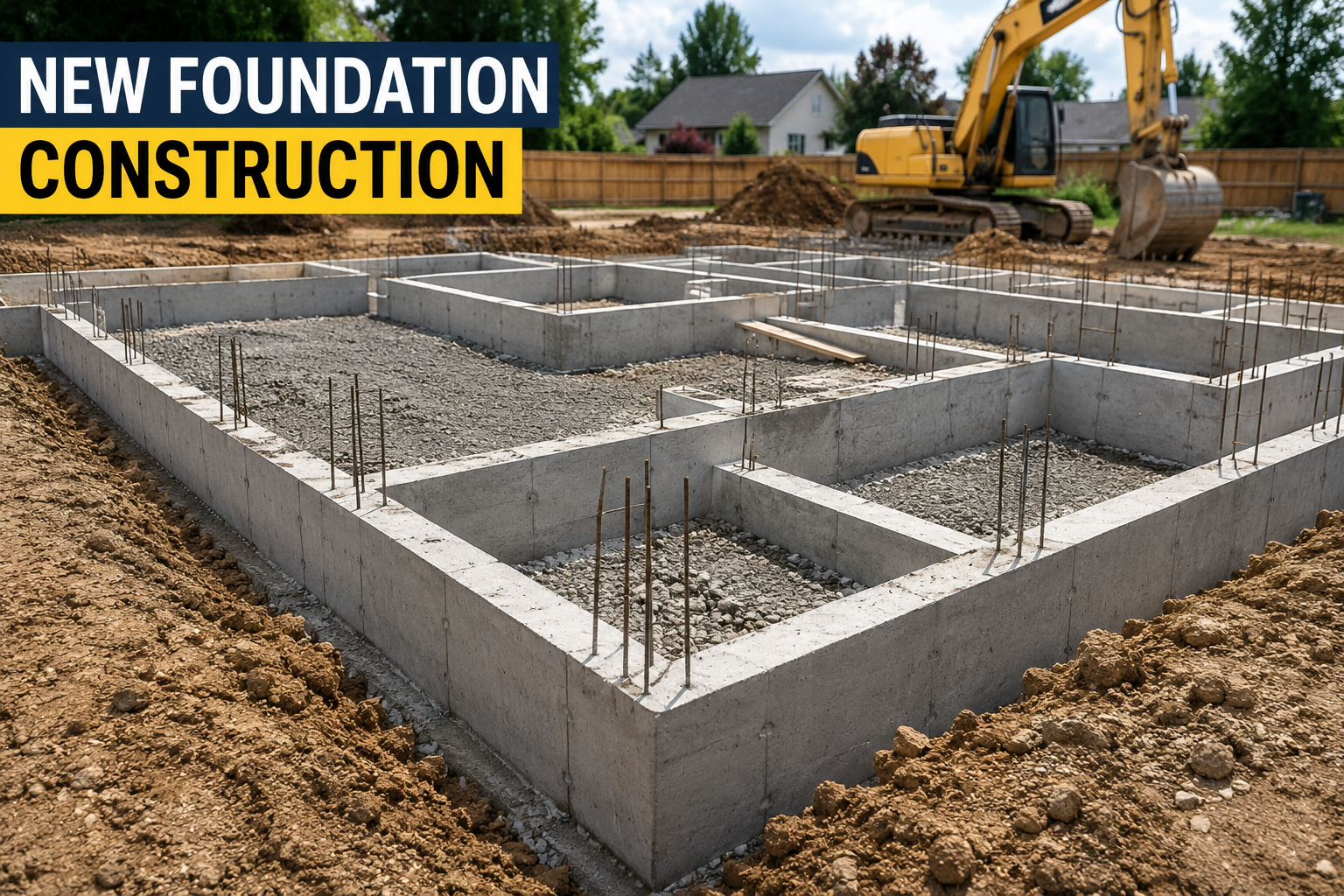
New Foundation Construction Every successful building begins with one critical element—the foundation. Whether you’re constructing a new home, commercial property, garage, or industrial facility, new foundation construction is the first and most important step. A properly built foundation provides structural stability, protects the building from environmental damage, and ensures the safety of everyone inside.
Many people focus on the visible parts of a building, such as roofing, windows, or interior design. However, the foundation is what supports everything above it. If it is designed or installed incorrectly, even the most beautiful building can develop serious structural problems over time. Cracks, uneven floors, moisture issues, and wall movement often trace back to foundation problems. New Foundation Construction
Understanding how new foundation construction works helps homeowners and builders make informed decisions. From selecting the right foundation type to preparing the site and pouring concrete, every stage requires careful planning and professional execution. In this guide, we’ll explore everything you need to know about building a durable and reliable foundation. New Foundation Construction
Why a Strong Foundation Matters
A foundation does much more than simply support a building. It distributes the weight of the entire structure evenly across the ground. Without proper weight distribution, the building could settle unevenly, causing cracks and structural damage over time.
Another important role of the foundation is protecting the building from moisture. Properly constructed foundations include drainage systems, waterproofing membranes, and moisture barriers that help prevent water from entering the structure. This significantly reduces the chances of mold growth and basement flooding.
A strong foundation also improves the lifespan of the building. Homes and commercial buildings with professionally constructed foundations often remain stable for decades with minimal structural issues. Investing in quality foundation construction today can save thousands of dollars in future repair costs.
Types of New Foundation Construction
Slab Foundation
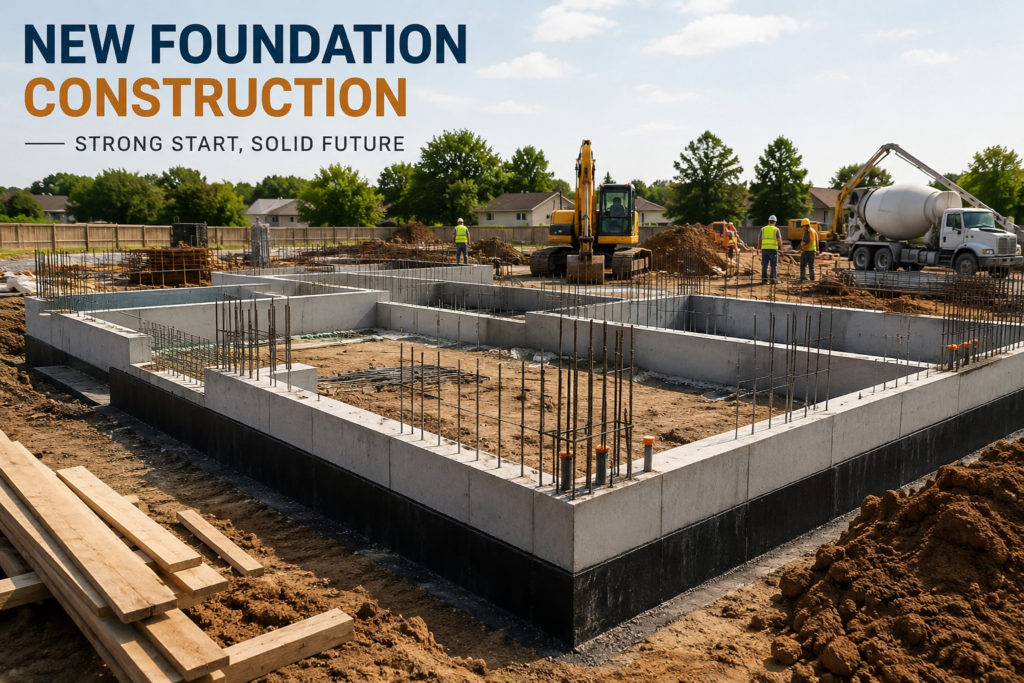
The slab foundation new foundation construction is one of the most common options, especially in warmer climates. It consists of a thick concrete slab poured directly onto prepared soil. Since there is no crawl space or basement, this type of foundation is generally less expensive and quicker to build.
Slab foundations require proper soil preparation before pouring concrete. Contractors compact the soil, install gravel for drainage, place reinforcement steel, and then pour concrete to create a smooth, durable surface.
One advantage of slab foundations is their low maintenance. However, plumbing repairs can become more complicated because water lines are often installed beneath the concrete.
Crawl Space Foundation
A crawl space foundation elevates the structure several feet above the ground. This creates an accessible space beneath the home where plumbing, electrical wiring, and HVAC systems can be installed.
The additional space makes maintenance and repairs much easier compared to slab foundations. Contractors also install ventilation systems to reduce moisture buildup beneath the structure.
Although crawl space foundations cost more than slabs, they offer better protection against flooding and provide easier access for future maintenance.
Basement Foundation
Basement foundations provide additional living or storage space below ground level. They require deeper excavation and stronger retaining walls but significantly increase usable square footage.
Modern basements are carefully waterproofed using drainage systems, waterproof coatings, and sump pumps to prevent water intrusion. Proper waterproofing is essential because underground walls are constantly exposed to moisture.
Finished basements can increase property value while offering extra bedrooms, home offices, entertainment rooms, or storage areas.
The New Foundation Construction Process
Site Evaluation
Every successful foundation begins with a thorough site inspection. Engineers evaluate soil quality, drainage conditions, groundwater levels, and property slope before designing the foundation.
Soil testing helps determine how much weight the ground can safely support. Some soils expand and contract with changing moisture levels, requiring special engineering solutions.
A detailed site evaluation helps prevent future settlement and structural issues while ensuring compliance with local building regulations.
Excavation
Once planning is complete, contractors excavate the construction site according to the approved design. Heavy machinery removes soil to the required depth while maintaining proper dimensions.
Excavation accuracy is essential because uneven digging can lead to foundation settlement later. Contractors continuously verify measurements throughout this phase.
After excavation, the site is cleaned, compacted, and prepared for the next stage.
Formwork and Reinforcement
Wood or metal forms are installed to shape the concrete foundation. These forms keep wet concrete in place until it cures and hardens.
Steel reinforcing bars, commonly called rebar, are placed inside the forms according to engineering specifications. Rebar dramatically increases the concrete’s strength and resistance to cracking.
Proper reinforcement ensures the finished foundation can withstand heavy structural loads for many years.
Concrete Pouring
Concrete pouring is one of the most critical stages in new foundation construction. Contractors use high-quality concrete mixtures specifically designed for structural applications.
During pouring, workers carefully level and vibrate the concrete to remove trapped air pockets. This process creates a dense, solid foundation with maximum strength.
After pouring, the concrete is left to cure gradually. Proper curing allows the concrete to reach its full strength and durability.
Factors That Affect Foundation Construction Costs
Several factors influence the total cost of new foundation construction. The size of the building is usually the biggest factor, as larger structures require more excavation, reinforcement, and concrete.
Soil conditions can also impact costs significantly. Poor soil may require stabilization techniques, additional engineering, or deeper footings before construction begins.
Foundation type also affects pricing. Slab foundations generally cost less than crawl spaces, while basement foundations are usually the most expensive because of excavation, waterproofing, and additional structural work.
Local labor rates, material prices, permit fees, and weather conditions can also influence the final project budget.
Common Mistakes to Avoid
One of the biggest mistakes during foundation construction is skipping soil testing. Without understanding the soil conditions, builders risk foundation movement and costly structural repairs.
Poor drainage planning is another common issue. Water collecting around the foundation can weaken the soil, increase hydrostatic pressure, and eventually cause cracks or leaks.
Using low-quality materials or rushing the concrete curing process may save money initially but often results in expensive repairs later. Quality workmanship always pays off in the long run.
Hiring inexperienced contractors can also create long-term structural problems. Always choose licensed professionals with proven experience in foundation construction.
Maintenance Tips for a New Foundation
Although foundations are built for durability, regular maintenance helps extend their lifespan. Keep gutters clean and ensure downspouts direct water away from the building.
Maintain consistent soil moisture around the foundation. Extremely dry or overly saturated soil can lead to expansion, contraction, and settlement issues.
Inspect the foundation periodically for cracks, uneven flooring, sticking doors, or moisture intrusion. Early detection allows small problems to be repaired before they become major structural concerns.
If landscaping is installed near the building, avoid planting large trees too close to the foundation because aggressive roots can affect soil stability.
Choosing the Right Foundation Contractor
Selecting the right contractor is just as important as selecting the right foundation type. Look for companies with proper licensing, insurance, and positive customer reviews.
Experienced contractors provide detailed estimates, explain each construction phase, and answer questions clearly. They also follow local building codes and use high-quality construction materials.
Request references from previous clients and ask about similar projects they have completed. Viewing past work provides confidence in the contractor’s abilities.
Communication is another important factor. A reliable contractor keeps clients informed throughout the project and addresses concerns promptly.
Modern Innovations in Foundation Construction
Technology continues to improve foundation construction. Many contractors now use laser-guided equipment for precise excavation and leveling, resulting in greater accuracy and efficiency.
High-performance concrete mixtures offer increased durability, improved crack resistance, and longer service life. Fiber-reinforced concrete is also becoming more common because it enhances structural strength without excessive additional materials.
Builders are also adopting environmentally friendly construction methods, including recycled materials, sustainable drainage systems, and energy-efficient insulation beneath slab foundations. These innovations improve both performance and environmental sustainability.
Conclusion
New foundation construction is the backbone of every successful building project. A properly designed and professionally installed foundation ensures structural stability, protects against moisture, and supports the building for decades. While the process requires careful planning, quality materials, and skilled workmanship, the long-term benefits far outweigh the initial investment.
Whether you’re building a new home, commercial property, or renovation project, understanding the foundation construction process helps you make informed decisions from start to finish. From site preparation and soil testing to reinforcement, concrete pouring, and waterproofing, every step contributes to the strength and longevity of the finished structure.
By working with experienced contractors, selecting the appropriate foundation type, and following proper maintenance practices, you can ensure your building remains safe, stable, and valuable for generations to come. A solid foundation is more than concrete beneath your feet—it’s the key to the lasting success of your entire construction project.
You May Read Also: New Era Furniture

